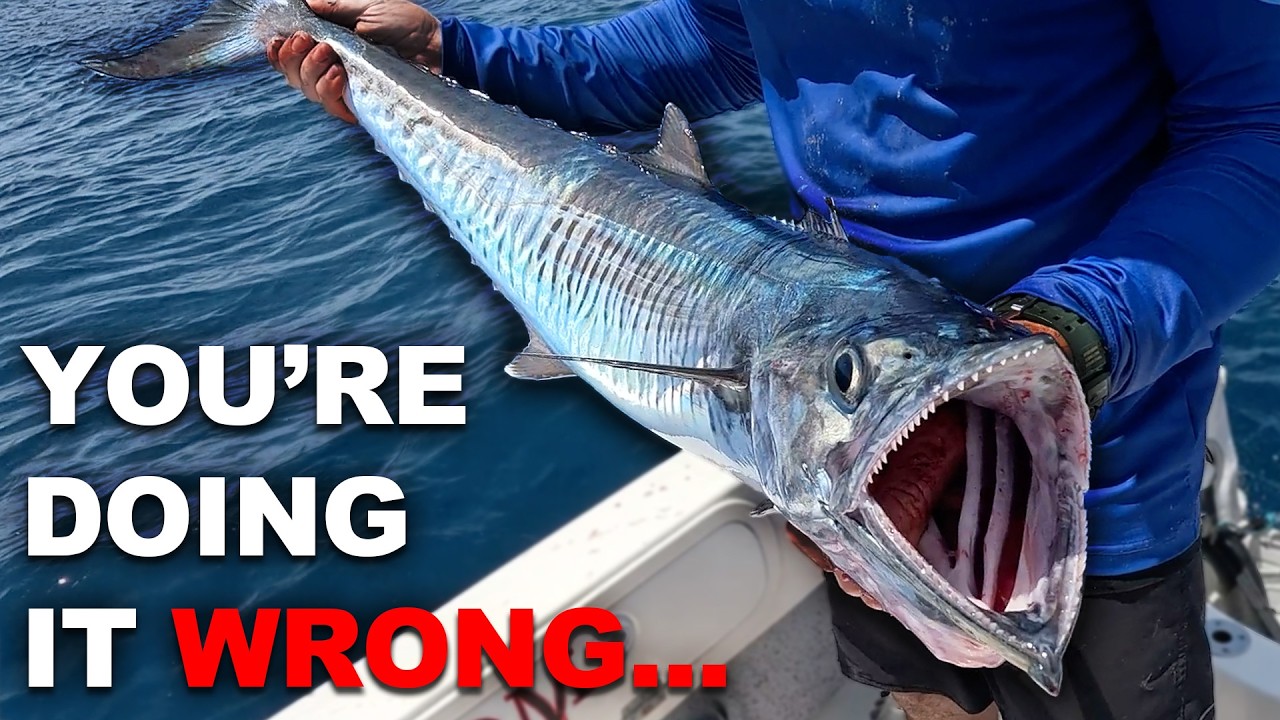
Few methods put Spanish mackerel in the boat as reliably as trolling, but success comes down to the finer points — which lures you run, how far back you set them, and how you handle a fish built for speed. A recent outing from the Tackling Australia crew, staged as a tongue-in-cheek "married competition" between anglers Angela and Scott, turned into a tidy lesson in all three.
The key was running two contrasting lures to cover the water. One large and one smaller lure, both designed to dive to around eight metres, were set at very different distances behind the boat — roughly 40 metres for the big one, about 15 metres for the smaller — and positioned to track just under the prop wash.
That spacing serves two purposes. "Spacing them at different distances makes it really easy to turn around, so your lines aren't coming together," one angler explained. The wash also does the attracting: "It brings the hunting fish to come and see what's going on. While they're looking at that, they find a lure coming past them and hopefully attack it." They started at a "fast walking speed."
Weather was on their side, and the crew explained why predators were willing to feed up high. "It's great conditions for trolling lures around, it's dark, it's windy," one said. "It's the sort of conditions that make predatory fish really happy to come close to the surface to feed. There's less chance of them being seen and eaten by other stuff."
The early fish exposed classic mistakes. Mackerel are blisteringly fast, and dropped hook-ups came from winding against a running fish or letting the line go slack. The advice: let them run on the drag, but the moment one charges the boat, "that's when you want to wind like hell," keeping "the rod bent the whole time."
The method delivered, with Scott racing to a two-from-two start before Angela got on the board. Each fish was bled and iced for the table.
The final lesson came at the cleaning table. Because mackerel have soft flesh, running a knife from head to tail tends to mash the fillet. Instead, the crew cut each side into slabs and skinned them sideways, working down the blood line and folding the blade flat to the skin. "Cutting them into slabs and going sideways is the best way to keep that beautiful texture of your fish going," the angler said, portioning family-sized chunks for the cryovac bag.