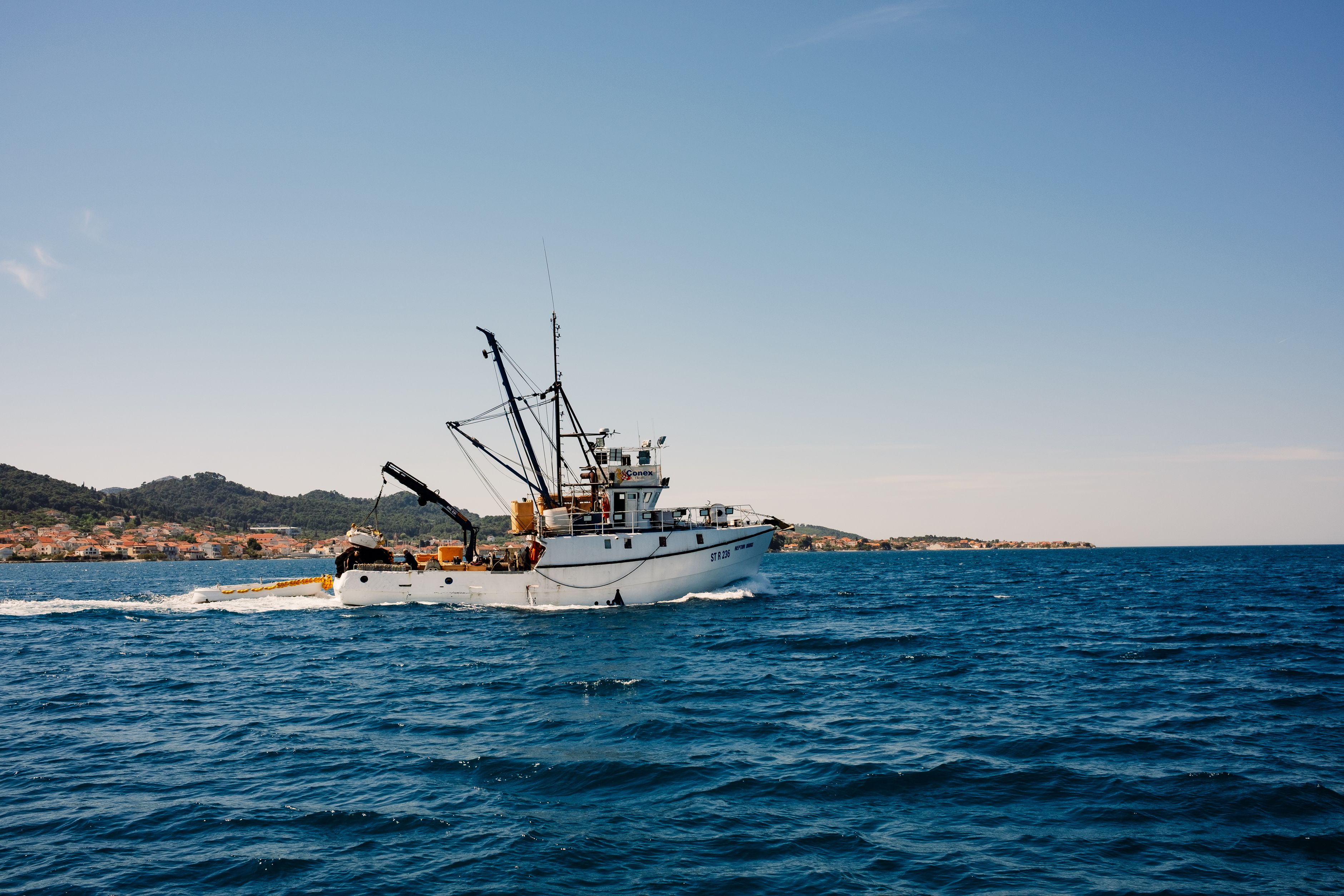
Illegal fishing thrives in the dark, and on Tuesday fifteen governments agreed to start switching on the lights.
Meeting at the 11th Our Ocean Conference in Mombasa, Kenya, on June 17, Belgium, Cameroon, Chile, the Dominican Republic, France, The Gambia, Ghana, Guinea, Liberia, Panama, Papua New Guinea, Peru, the Republic of the Congo, Somalia and South Korea signed the Mombasa Declaration, a joint pledge to drag the fishing trade into the open. It was the first Our Ocean Conference held in Africa.
The agreement targets the secrecy that lets rogue operators work unseen. Signatory nations committed to modernise their vessel registries, publish the fishing licences they issue, and share data across the seafood supply chain so a boat's owner and history can be traced from net to plate.
The scale of the problem makes the case. Illegal, unreported and unregulated fishing, known as IUU, costs the world economy as much as $50 billion a year. About one in five fish on dinner tables is tied to it. And in a global industry worth north of $400 billion, more than 120,000 fishers are believed to be held in modern slavery at sea, hidden by the same lack of oversight.
"In my country, our very existence depends on fish," Arthur said. "We continue to wage war on IUU fishing. We have not won yet due to lack of transparency."
For Arthur, the value of the declaration was getting rivals and partners to commit in public. "The Mombasa Declaration provides a platform for all of us, the different governments, to come together and declare on an international platform that we are working together and fighting together for transparency in the fisheries sector," she said. The point, she stressed, was results: "We are not doing transparency for its own sake, we are doing it to achieve better social and environmental outcomes."
France's ocean envoy Catherine Chabaud, signing for the country's overseas territories, kept it blunt. "This initiative is based on a simple conviction: We will not be able to effectively combat IUU fishing without greater transparency and international cooperation," she said.
Ryan Orgera, director of the Coalition for Fisheries Transparency, which helped shape the text, said opacity is what links the industry's ugliest practices.
"Hidden vessel ownership, unregulated fleets, unreported catches, forced labour, human rights abuses and untraceable supply chains are all enabling illegal and destructive fishing practices," Orgera said. "Without transparency, we don't have accountability, and without accountability, we do not have sustainability."
The conservation group Oceana, a long-time advocate for open vessel-tracking, backed the deal. "For too long, fisheries have operated far from shore, with inadequate oversight and opaque supply chains," said vice president Beth Lowell.
Kenya used its turn as host to press its own record. President William Ruto told delegates by video the country had already moved: "Kenya is already at work. We are restoring mangroves, cleaning our waters, reforming fisheries, and strengthening ocean governance."
His deputy, Kithure Kindiki, framed the work as a debt to those who come next. "The ocean is key to Kenya's economic growth, hence the interest in guarding it against destructive activities," he said. "We have an obligation as the current generation to return the ocean to our children cleaner, richer, and more resilient than we found it."
None of it is legally binding, and converting the pledges into public registries and open licence records will be slow. Still, with the Coalition for Fisheries Transparency, the Environmental Justice Foundation and Oceana behind it, supporters say the declaration hands watchdogs a clear benchmark against which to measure all fifteen signatories.