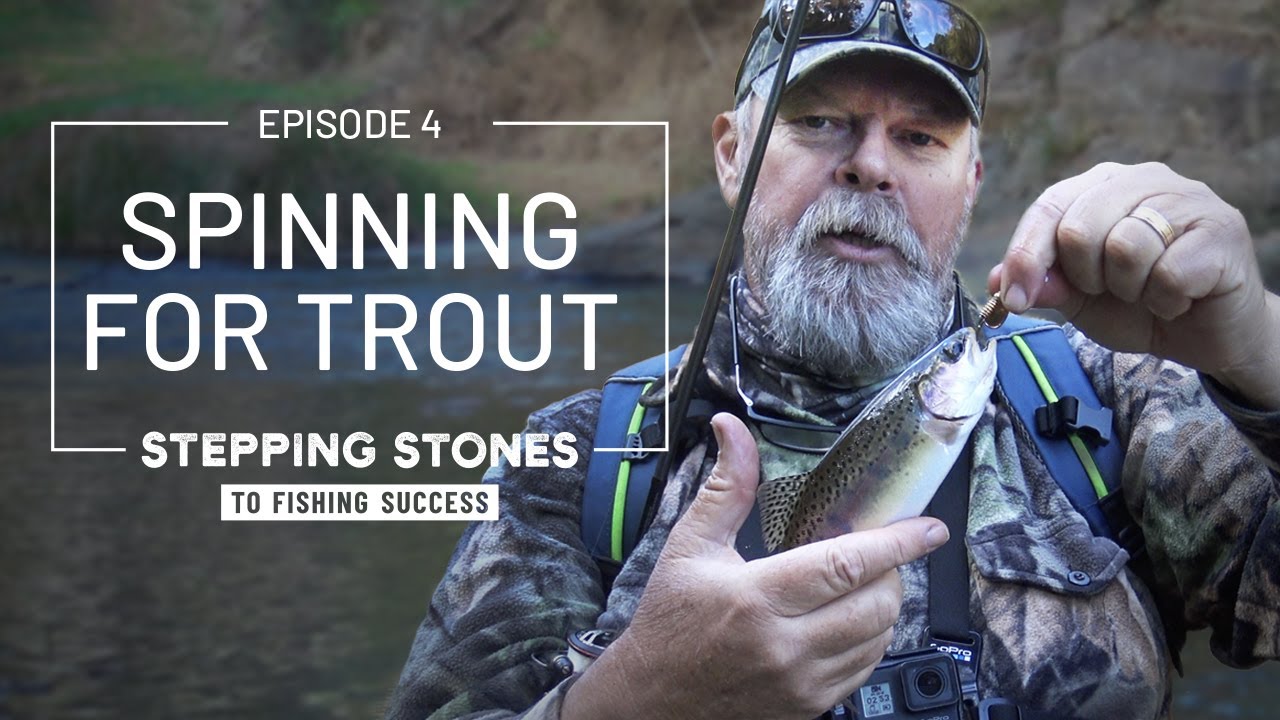
The spinner is one of the oldest lures in existence, and veteran presenter Steve "Starlo" Starling reckons it remains one of the deadliest ways to tempt a trout. It is also personal for him.
"Trout were one of the first fish I ever caught in my life," Starling says. "Even after all these years and all the species I've targeted around the world, they remain one of my absolute favourites."
He splits the hardware into two camps. The inline spinner runs "a blade that revolves around a central shaft or wire" to throw "flash and vibration that the fish home in on," while the spoon is "simply a curved piece of metal that wobbles through the water." Choosing a weight is the next step: roughly two to three grams for small streams, five to seven grams or heavier for big lakes, wide rivers or deep-holding fish.

The retrieve is the part most anglers rush. Trout, Starling explains, "will often follow a lure for quite a long way before they decide whether to eat it or not, so you want to keep your retrieve nice and steady and consistent." Yet he is quick to add a caveat - "sometimes a little pause or a little twitch can be just the thing to trigger a strike from a following fish."
Where you put the lure counts just as much. "Trout love structure," he says. "They love things like fallen trees, rocks, weed beds, undercut banks - anywhere that provides them with shelter and an ambush point." In current, he casts up and across and lets the lure swing down naturally to ambush points.
For tackle, Starling keeps it light: a two-to-four kilo outfit, a six-to-seven-foot rod with a soft tip, braid for distance and feel, and a short fluorocarbon leader for clear, shy water. He warns that a spinning blade can twist your line badly, so he runs a quality ball-bearing swivel up the line and starts winding the moment the lure lands so the blade turns straight away.
He finishes on a release note, fishing barbless because "it makes it so much easier to release the fish, and it does a lot less damage to them" - sound advice for anyone planning to send most of their trout back to fight another day.