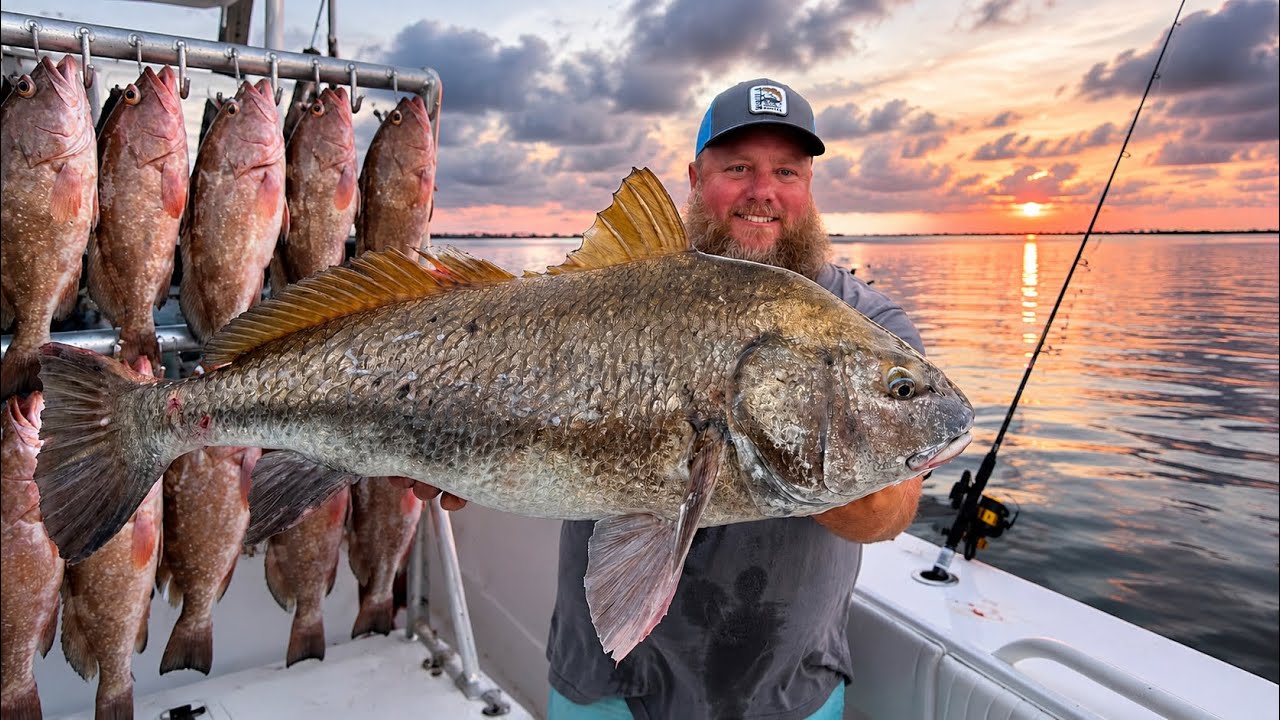
An offshore trip to Florida's Forgotten Coast produced a cooler of grouper, but the most memorable catch of the week came from dry land. Visiting Wakulla County, an angler from Tug Trash Outdoors detoured into the tiny town of Sopchoppy, which proudly calls itself the worm grunting capital of the world, to witness a folk art most anglers have only ever heard about.
Worm grunting works on a simple trick. A wooden stake, or stob, is driven into the ground and rubbed with a flat iron, sending a buzzing vibration through the soil. To an earthworm, it feels like a burrowing predator closing in, and the worms come up to escape, ready to be picked up by hand for bait.
The grunter showing it off had been at it almost all his life. "Ever since I was about seven years old," he said. "Sixty-five, seventy years." His iron was grooved and pitted from decades of use, shaped, he noted, by his own hand and his father's before him.

This was survival before it was a curiosity. "If you wanted to go fishing, you needed some worms. That's how you did it," he said. The local native worms, he insisted, out-fish anything store-bought, especially in spring. "During the bedding part of the brim in the spring, they can't beat a worm," he said. "That artificial, they just forget about it."
The craft is getting harder. Grunting needs damp ground, and the region has trended drier. "We don't have the water we used to have," he said. He once supplied worms in bulk to a major Southern bait operation; now the trade runs mostly on an honour system among friends, family and a handful of local stores.
Asked what worm grunting is today, he summed it up plainly: "It's a dying art." Sopchoppy's annual Worm Gruntin' Festival keeps the tradition in the public eye, but the real thing, calling worms from the earth with nothing but a stick and a strip of iron, is a skill fewer and fewer people still hold.