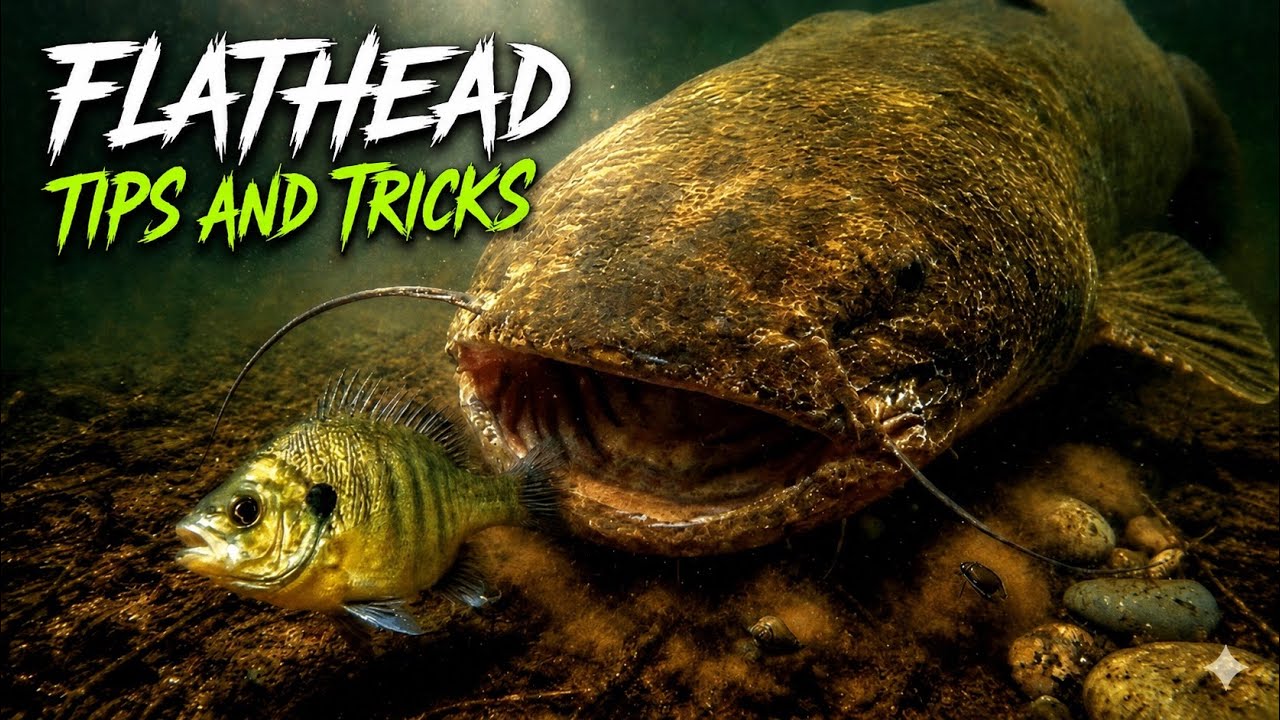
Landing a quality flathead catfish from a sleepy river is far more deliberate than many anglers think, and a recent tutorial from the Hagen Grubbs Fishing channel lays out the easily overlooked choices that turn a fishless evening into a productive one.
Shot on the angler's home water just a few miles from his house, the trip hinged on timing. The river had been low and almost still all spring before a week of solid rain lifted it and got it moving again — and that returning current, he explained, is the very thing that fires flatheads up.
Bait comes first, and the standard is strict. Flatheads favour fresh offerings; live bait always has a place, but on this particular river cut bait frequently does better. Whatever the choice, it must be fresh — the angler conceded he has taken the odd flathead on frozen or old bait, but insists it is the exception. To keep his shad in top shape he runs a 25-gallon tank treated with a couple of cups of rock salt. "That salt makes all the difference in the world when you're trying to keep shad alive," he said, having gathered shad, bluegill and a favoured mooneye for variety.
How the bait is rigged depends on the flow. Using three-way rigs with both long and short droppers, he noses his shad when current is present and saves back-hooking for lakes or slack water. In moving water, he reasoned, a back-hooked baitfish tires and dies quickly, whereas a nose-hooked one swims naturally with the current.
His knack for picking water is the standout. He hunts banks studded with rock ledges and fallen timber and pays close attention to current speed. Blue cats, he observed, thrive in really fast water, but flatheads like it gentler — roughly a mile an hour is, to his mind, ideal. He also looks for spots where current bounces off a bank and eases, concentrating baitfish and the predators stalking them.
Depth and time of day complete the approach. He works deeper water of 25 to 30 feet during the day before shifting to 10 to 20 feet near dusk, and he guards his stealth carefully, easing into place on the electric motor and lowering the anchor without a sound because, as he put it, boat noise matters a great deal when targeting larger fish.
He keeps his expectations grounded, too. On a river such as this, he said, one or two flatheads makes for a good session — "you can't catch what doesn't live there" — and across two evening outings he landed a pair of strong fish, one near eight pounds and a marginally larger second-day fish bearing early spawning signs, with the water holding at 68 degrees.
Each fish was released. Though he freely admits flatheads eat well, he returns almost all of them, keeping only the occasional small blue cat. "I enjoy catching the flathead so much I normally just put them on back and let them grow up," he said — a low-key conservation streak running through what is otherwise a clinic in reading current and cover.